

For years I avoided daily sunscreen on my face because everything I tried left me looking like I had dusted myself with powdered sugar. The white cast. The greasy drag across already-dry cheeks. The way foundation sat on top of it in patches. I told myself I was protecting my skin with the hat I wore outside and the SPF in my foundation, which I now know was wishful thinking. By the time I was 56, my dermatologist pointed to two things side by side: the side of my neck that a scarf covered every winter, and the side that did not. The difference was not subtle. After that conversation I stopped making excuses and started looking for a sunscreen that would actually work on mature, dry skin without the cosmetic disasters I had put up with before.
The formula that finally changed my habit was the Eucerin Sun Age Defense SPF 50 Face Sunscreen with Hyaluronic Acid. But the product alone was only part of the answer. Application technique, timing, and how you layer it with everything else in your routine matter just as much as what is in the bottle. This guide covers both, step by step, so you can build a daily SPF habit that actually sticks and does not ruin your makeup or leave that telltale cast.
If white cast has been your excuse, Eucerin Sun Age Defense may be the SPF that finally ends it.
The Eucerin Sun Age Defense SPF 50 with Hyaluronic Acid is formulated for dry and sensitive skin. It goes on clear, absorbs without drag, and adds a hit of hydration that mature skin appreciates in the morning.
Amazon Check Today's Price on Amazon →Step 1: Start With a Clean, Dry Face
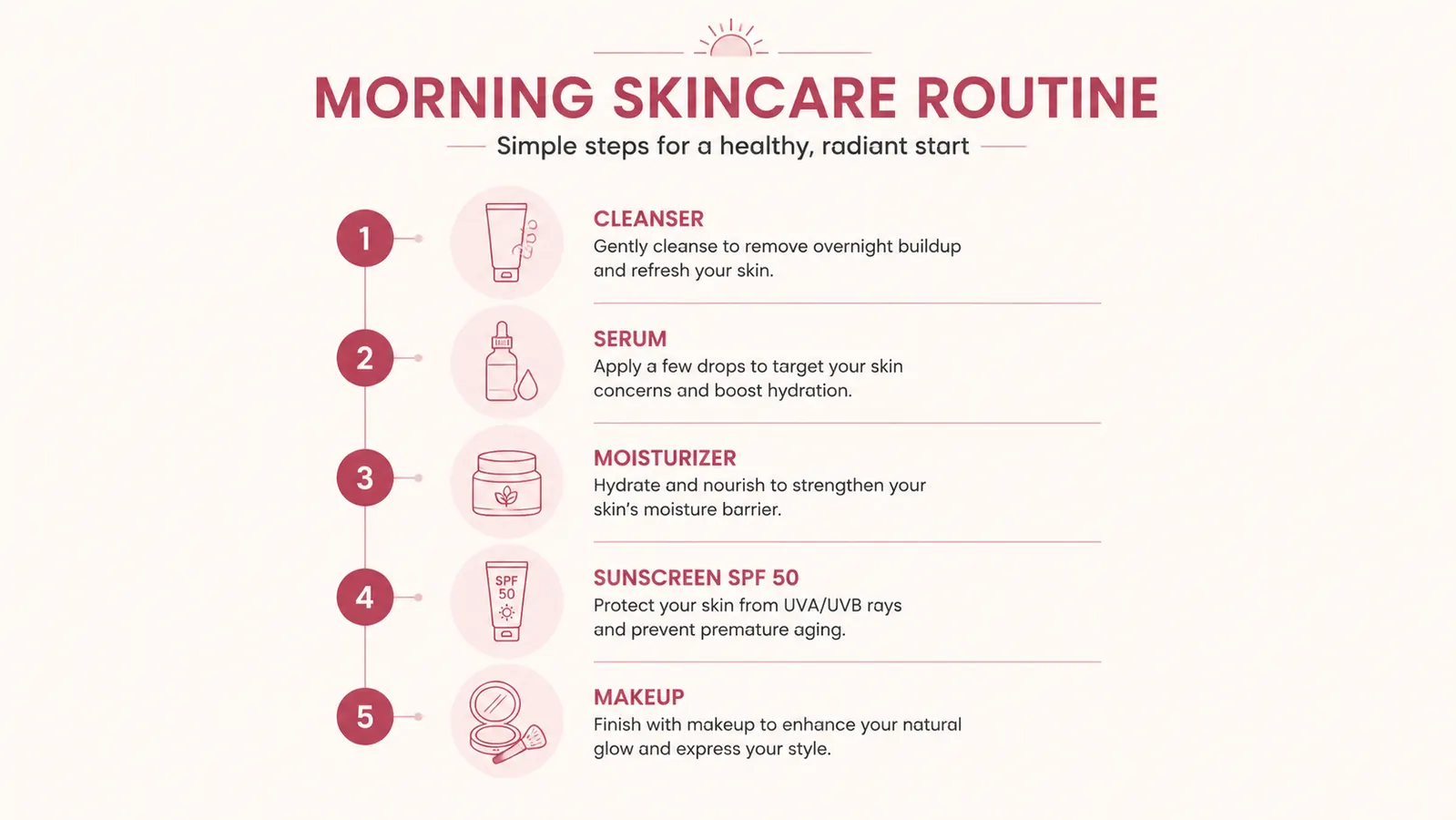
Sunscreen goes on after cleansing, not before. This sounds obvious but it matters more on mature skin than it did at 30. Older skin tends to produce less sebum, which means any residual cleanser, hard water film, or overnight product residue creates an uneven surface that makes sunscreen pill, slide, or sit visibly on top. Wash your face with a gentle, non-stripping cleanser, rinse thoroughly, and pat dry. Do not rub the towel across your face. Pat. Then let it air for 30 to 60 seconds before you reach for anything else.
If you use a toner or essence, apply it now and let it absorb fully. These lightweight steps help the skin drink in what follows, including sunscreen, more evenly. Rushing this stage is where most people run into texture problems before the SPF even goes on.
Step 2: Apply Your Serum and Let It Settle
If a serum is part of your routine, it goes before sunscreen, not after. This is one of the layering rules that catches people off guard. The logic is simple: serums are formulated to penetrate, and sunscreens form a film at the surface. If you put the serum on top of the sunscreen, you dilute the sun filter and prevent the active ingredients from reaching the skin. Apply your serum to still-slightly-damp skin, press it in with your palms rather than rubbing, and wait at least 60 seconds before the next step. On dry mature skin, 90 seconds is better.
One thing I learned the hard way: if you use a vitamin C serum or anything with a low pH, let it sit for a full two minutes before layering sunscreen over it. Vitamin C oxidizes quickly when it contacts the wrong pH environment, and rushing the layering sequence is one reason people stop seeing results from serums they paid good money for.
Step 3: Apply Moisturizer If You Need It, But You May Not
Here is where the Eucerin Sun Age Defense SPF 50 simplifies your routine. It contains hyaluronic acid, which draws moisture into the skin from the environment. On most mornings, if I have used a serum, I skip a separate moisturizer entirely and let the Eucerin double as both hydration and protection. This cuts down the number of layers, which means less chance of pilling or sliding, and a cleaner finish under makeup. If your skin is very dry or you are going through a retinol adjustment phase where flaking is an issue, layer a thin, fast-absorbing moisturizer first and give it 60 seconds before the SPF.
Avoid heavy, occlusive creams directly before sunscreen unless your skin is extremely compromised. Rich creams create a barrier that can prevent the sunscreen from bonding properly to the skin surface, and on mature skin that already has some fine texture, a greasy underlayer is one of the main reasons SPF looks blotchy by midday.
Step 4: Dispense the Right Amount and Apply It in Sections
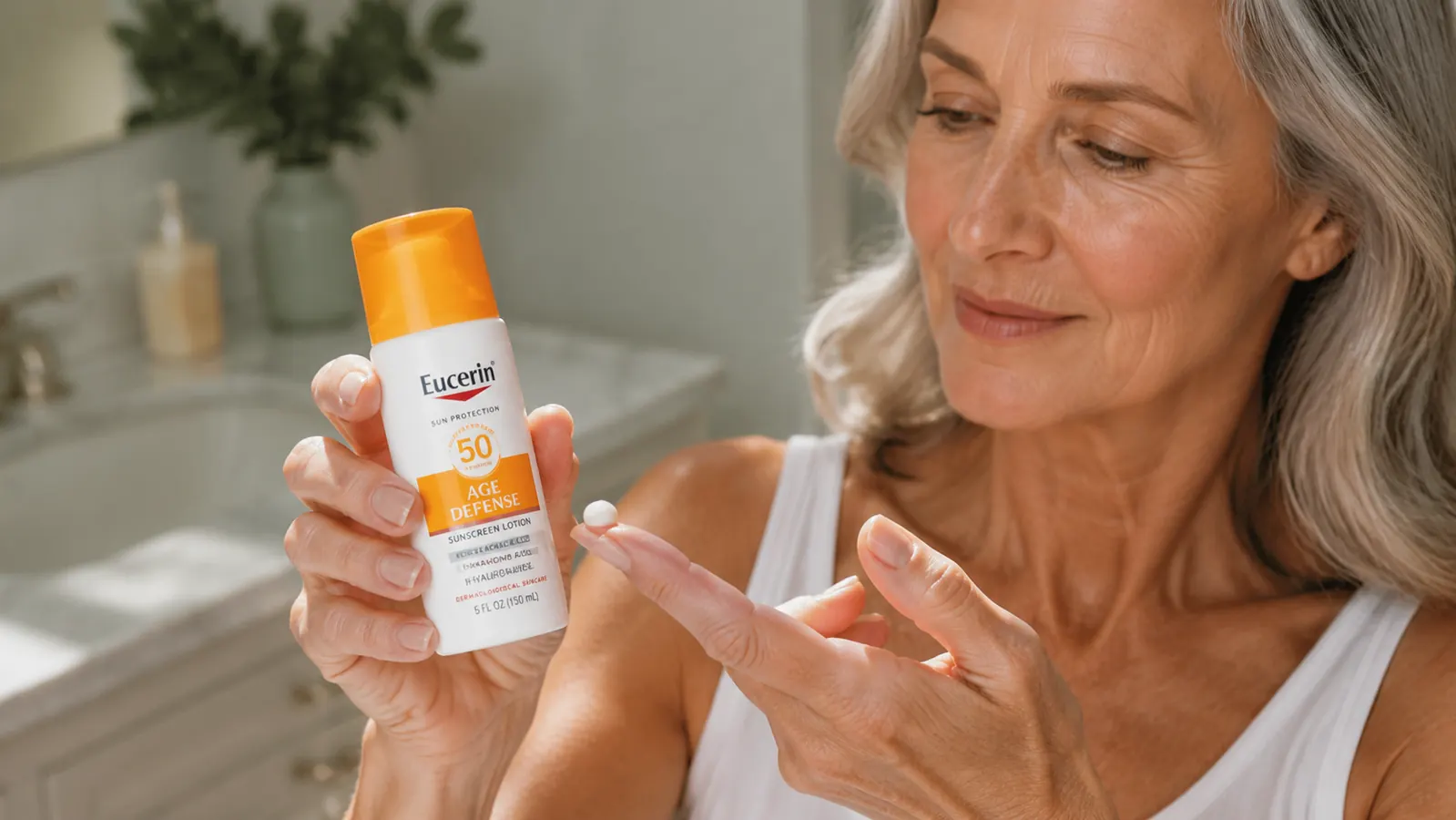
The single biggest application mistake I see is using too little sunscreen. Dermatologists consistently recommend about a quarter teaspoon for the face alone, which is roughly the size of a nickel. Most people use about half that, which means they are getting roughly half the SPF protection the label promises. With the Eucerin Sun Age Defense, I use a little over a pump, which gives me just about the right amount for my face, jaw, neck, and the tops of my ears. Those last two are easy to forget, and they are often where women my age first notice sun damage.
The technique that eliminated white cast for me was applying in sections rather than dotting it across my whole face and rubbing. I put a small amount on my forehead and pat it outward from the center. Then the same on each cheek, pressing gently and blending toward the hairline and down the jaw. Then the nose, the chin, and the neck in downward strokes. Patting and pressing, not rubbing side to side. This distributes it evenly without disrupting dry skin texture and avoids the streaking that causes the chalky look.
The white cast almost always comes from rubbing mineral filters back and forth across dry skin. Pat and press instead, and the problem mostly disappears.
Step 5: Wait Two Minutes Before Applying Makeup
This is the step most people skip, and it is the one that causes the most grief. If you apply foundation or powder before the sunscreen has set, you disrupt the film it is forming and the two products mix in a way that leaves you with pilling, uneven coverage, or a finish that breaks down by 10 in the morning. Two minutes is not a long time. Set a timer the first few times if you tend to rush. You can use those two minutes to brush your teeth, pick out your earrings, or let the dog back in.
Once the Eucerin has set, I find it creates an excellent base for tinted moisturizer or light foundation. The hyaluronic acid gives the skin a slightly plumped, smooth surface that makes fine lines look less obvious under makeup. A few of my readers have told me they stopped using primer entirely after switching to this sunscreen because the base it creates is that consistent.
Why Eucerin Sun Age Defense Works Particularly Well for Mature Skin
I tested eight SPF 50 face sunscreens over the course of a year, and the Eucerin stood out for a few specific reasons that matter after 50. First, it is a chemical sunscreen rather than a purely mineral one. Mineral sunscreens with zinc oxide are often excellent for sensitive skin, but they are the primary culprits behind white cast, especially on deeper or tanned complexions. The Eucerin's chemical filters absorb UV light rather than reflecting it, which is why it goes on essentially transparent. I noticed zero cast on my own skin, which runs fair but has some warmth from years of outdoor time.
Second, the addition of hyaluronic acid is not marketing fluff. I noticed within the first week that my skin looked less dull at midday, which was a problem I had attributed to age but turns out was partly dehydration that a hydrating sunscreen could address. Third, and I cannot emphasize this enough for women who have had bad experiences with SPF: the texture is lotion, not paste. It spreads easily, which is the practical difference between a sunscreen you will actually use every day and one that sits in your medicine cabinet because the application is too tedious.
What Else Helps
A few habits alongside your daily SPF will compound the results. Wearing a wide-brimmed hat on days when you are outside for more than 30 minutes does not mean you can skip sunscreen, but it does meaningfully reduce the UV load your skin absorbs. Reapplication is something most women never think about: SPF breaks down after about two hours of sun exposure, so if you are running errands outdoors or sitting near a sunny window all morning, a touch-up matters. Setting sprays with SPF built in make reapplication over makeup easy without smearing your face.
Also worth knowing: SPF 50 blocks about 98 percent of UVB rays, and SPF 30 blocks about 97 percent. The difference is real but not dramatic, which is why consistency matters far more than the exact number on the bottle. Wearing SPF 30 every single day of the year is more protective than wearing SPF 100 only when you remember to. The habit is the thing.
Common Mistakes That Cause White Cast or Greasy Finish
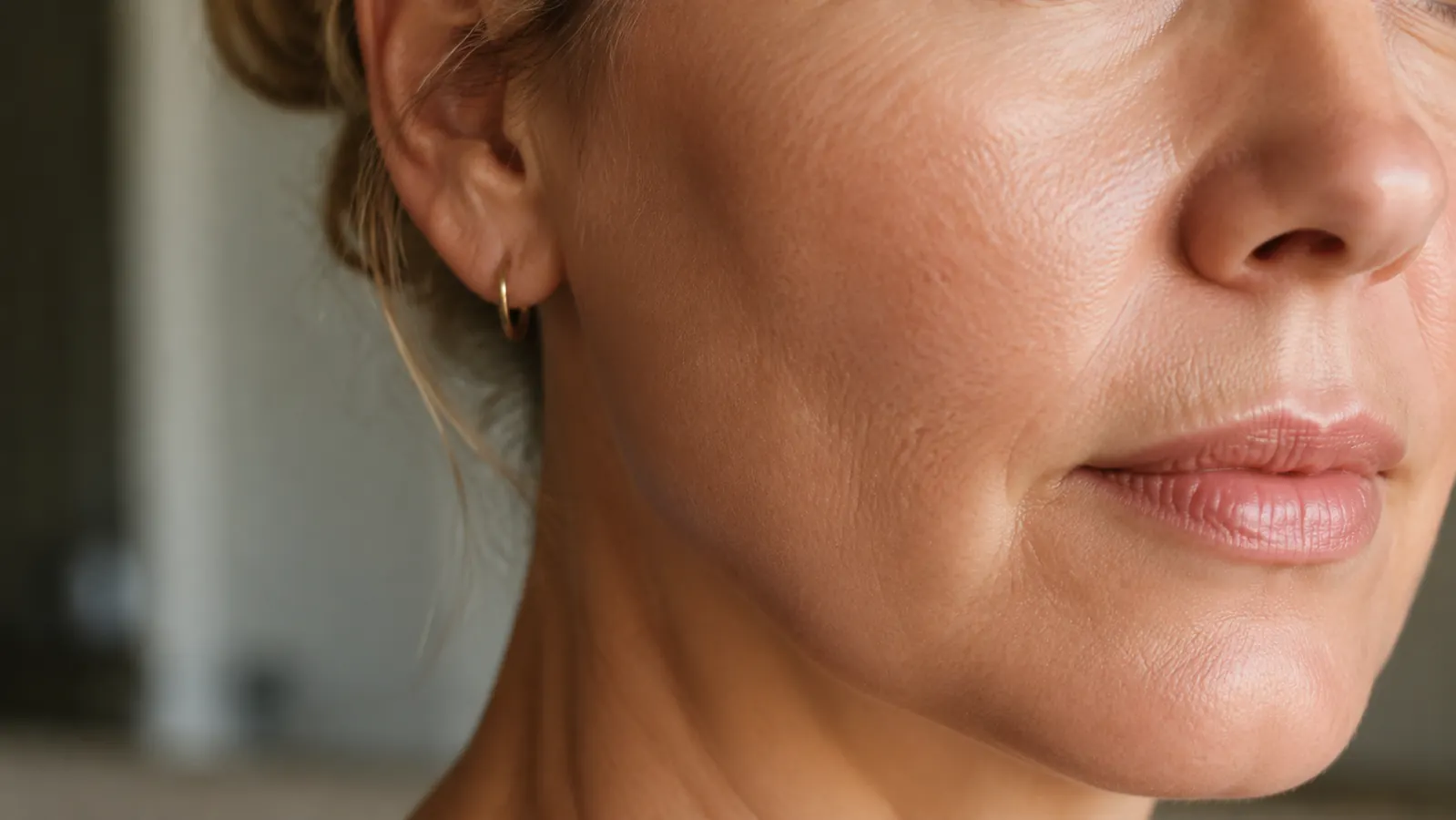
If you have tried daily sunscreen before and given up, one of these is probably what went wrong. Applying over a still-wet face or over a product that had not absorbed, mixing mineral and chemical formulas from different products in the same layer, rubbing instead of pressing, using far too little and then wondering why the finish looks uneven, or choosing a formula designed for body use rather than face. Body sunscreens are formulated differently and almost always feel too heavy and too cast-y for the face. Use a face-specific SPF. The Eucerin Sun Age Defense is labeled for the face and sized accordingly.
One mistake I made for years was applying SPF directly from the refrigerator during summer because I stored it there to keep it fresh. Cold product drags and pills on skin, which ruins both the texture and the coverage. If you store your sunscreen in the fridge, take it out 10 minutes before you need it. Or keep it at room temperature, which is fine for most formulas within their stated shelf life.

The Honest Tradeoffs
No sunscreen is perfect, and the Eucerin Sun Age Defense is not either. It is a 2.5 ounce bottle, which at a quarter teaspoon per use will last about 30 days for face and neck only. If you add your chest and hands, which are smart to do, you will go through it faster. Some women find the scent slightly noticeable in the first minute after application, though it dissipates quickly. I would call it faint lotion scent rather than fragrance, but if you have significant fragrance sensitivity, patch test first. It is also not a tinted formula, so it adds zero coverage, which is the right choice if you want to layer makeup freely but a minus if you were hoping for one product that does both.
With a rating of 4.7 stars from over 4,600 Amazon reviews, the product earns its reputation. But the reviews from women who had problems almost always describe one of two things: applying too little, or not waiting for prior layers to absorb. Neither of those is a formula flaw. Both are technique, and both are fixable with the steps above.
Ready to make daily SPF a habit that actually works on your skin?
Eucerin Sun Age Defense SPF 50 with Hyaluronic Acid is the formula that turned daily sunscreen from a chore into a two-minute step I do not think twice about. It goes on clear, absorbs well, and keeps skin comfortable all day.
Amazon Check Today's Price on Amazon →