

Most women over 50 have tried retinol at least once. A lot of them quit before it had a chance to work. They used it wrong, their skin protested, and they put the tube in a drawer. I was one of them, until I figured out that the product was never the problem. The routine around it was. Once I learned how to build a proper night routine with the Olay Retinol Night Cream as the centerpiece, my skin stopped fighting me. Fine lines softened, my skin tone evened out, and I stopped waking up with that tight, dried-out feeling I had come to expect.
This guide walks you through the exact sequence I now use, step by step. It is not complicated. But the order matters more than most people realize, and getting the frequency right in the first four weeks makes the difference between skin that adapts and skin that peels and gives up. Whether you are brand new to retinol or you have tried it before and struggled, start here.
If your skin looks the same at 60 as it did at 55, your moisturizer is not doing enough.
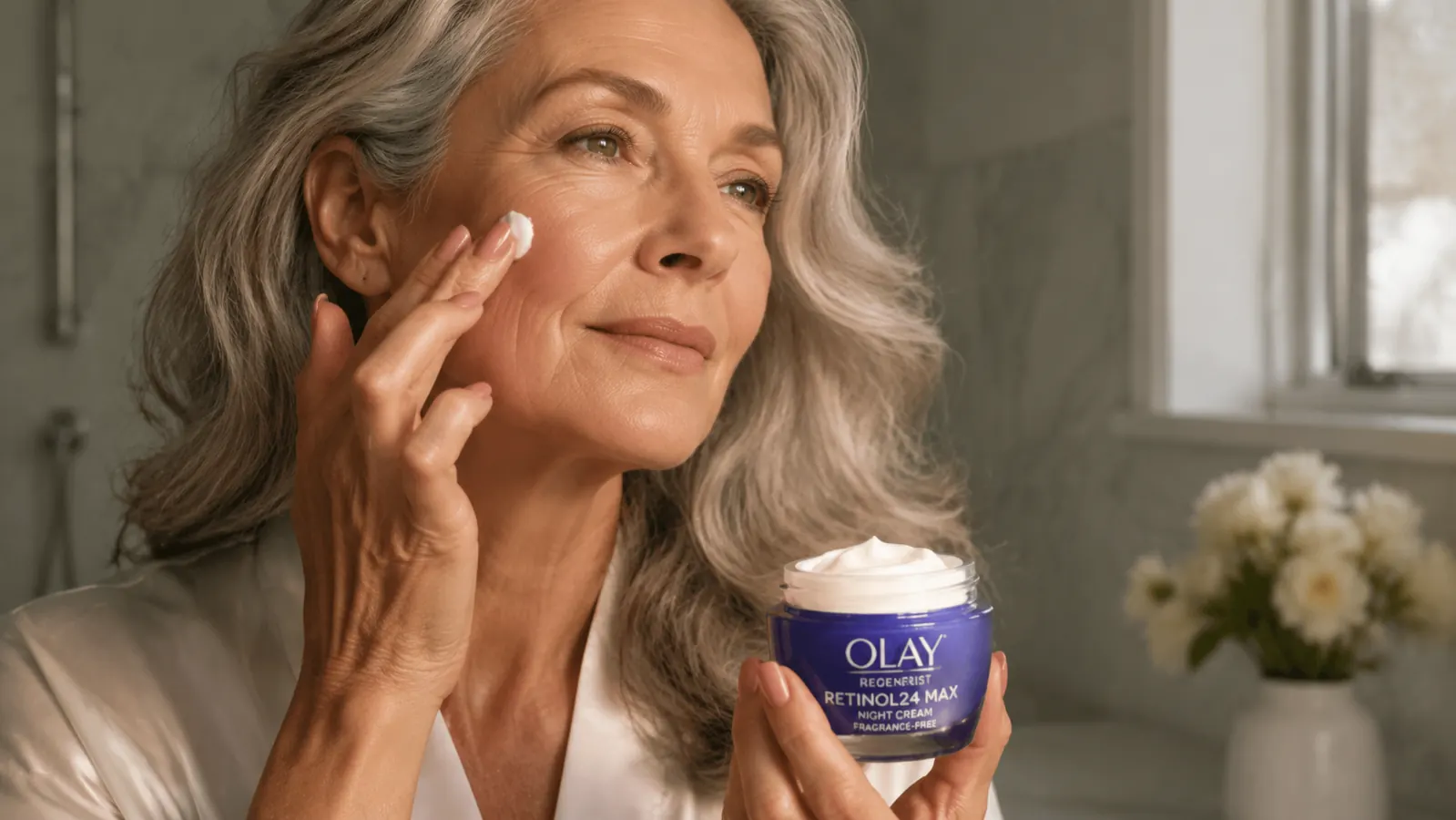
Olay Retinol Night Cream combines retinol with triple collagen, peptides, and niacinamide in one fragrance-free formula. It is what I reach for every night, and it is the product I build this entire routine around.
Amazon Check Today's Price on Amazon →Step 1: Remove Everything From Your Skin First
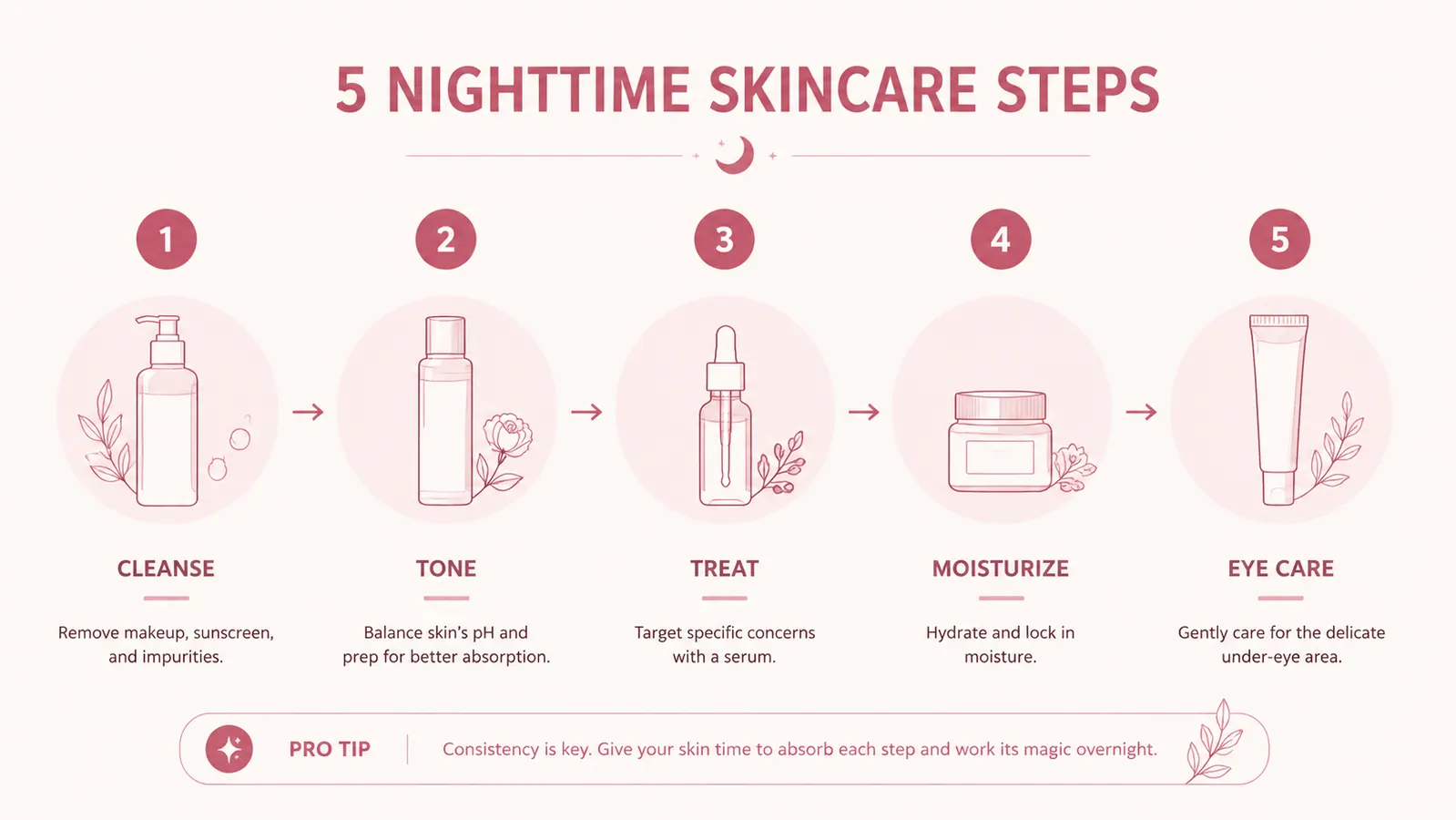
Retinol does not work well on top of a day's worth of sunscreen, makeup, and pollution. Before anything else, you need a clean surface. Use a gentle, low-lather cleanser, not a foaming soap that strips your lipid barrier. For mature skin, I prefer a cream or balm cleanser. Take a full sixty seconds to work it in with your fingertips, then rinse with lukewarm water. Hot water is a quiet enemy of aging skin. It feels good in the moment, but it strips the oils your skin is already struggling to hold on to after 50.
Pat dry with a clean towel. Do not rub. Rubbing a damp face with a rough towel is one of those small things that accumulates into visible damage over years. Leave your skin slightly damp, not soaking. That residual moisture matters in the next step.
Step 2: Apply a Gentle Hydrating Toner or Essence (Optional but Helpful)
This step is optional, but if your skin runs dry or reactive, it earns its place. A simple hydrating toner or essence, one with glycerin or hyaluronic acid and nothing else, lays down a layer of water-based moisture before your retinol goes on. This is sometimes called the sandwich method, and it genuinely reduces early-stage irritation in people who are new to retinol or who have thinner, more sensitive mature skin.
Avoid toners with alcohol or exfoliating acids like glycolic or salicylic at this step. You are not exfoliating tonight. Retinol will do that work for you, slowly and steadily, over the coming weeks. Adding a chemical exfoliant the same night as retinol is the fastest route to a red, flaky face. Skip it.
Step 3: Wait Two Minutes, Then Apply Your Retinol Cream
This is where the Olay Retinol Night Cream comes in. Dispense a pea-sized amount, about half a teaspoon for your whole face. Any more than that and you are not getting better results. You are just increasing the chance of irritation. Dot it across your forehead, both cheeks, your nose, and chin, then blend it in gentle upward strokes. Do not tug the skin downward. Go up and out.
The two-minute wait after your toner matters because retinol applied to very wet skin absorbs faster and more intensely, which sounds good until your face looks like sunburn the next morning. Slightly damp is fine. Wet is not. Let the toner or essence settle before applying the cream.
What makes the Olay formula easier to work with than standalone retinol is that it pairs the retinol with triple collagen, peptides, and niacinamide in the same jar. Niacinamide is particularly good at calming inflammation and supporting the skin barrier, which means it counteracts some of retinol's tendency to irritate. You get the anti-aging benefits without having to layer four separate products to manage the side effects.
Step 4: Set Your Frequency for the First Four Weeks
This is the step most people skip because nobody tells them how important it is. If you apply retinol every night from day one, mature skin will almost certainly revolt. You will experience peeling, redness, and that tight stinging sensation that makes you feel like you are doing something very wrong. You probably are, but not because retinol is bad for your skin. You just introduced it too fast.
For weeks one and two, use the Olay Retinol Night Cream two nights per week. Pick two nights that are not back to back, say Monday and Thursday. Give your skin five days between applications. In weeks three and four, move to three nights per week. By month two, most women over 50 can tolerate four to five nights per week without any meaningful irritation. That is when you start to see real visible change.
Pushing through a little dryness in weeks two and three is normal. Your skin is adjusting its cell turnover rate, which takes time. What you should not push through: persistent redness that lasts more than 24 hours, skin that feels hot to the touch, or visible peeling that does not resolve. If that happens, drop back to once a week and slow the ramp.
The women who get the best results from retinol are not the ones who use the most of it. They are the ones who give their skin enough time to adjust without quitting in week three.
Step 5: Lock in Moisture Over the Retinol
After your retinol cream has had five minutes to absorb, add a layer of plain, fragrance-free moisturizer on top. This is called the sandwich method, and it is particularly important in the early weeks. A simple ceramide moisturizer or even a few drops of facial oil like squalane will hold in the active ingredients and prevent transepidermal water loss overnight, which is a real and measurable problem for mature skin that many women do not realize they have.
One thing I want to be clear about: the Olay Retinol Night Cream is itself a moisturizer, so some nights, especially once your skin has adapted by month two, you may not need anything on top of it. In dry winter months, I always add a layer of squalane oil. In humid summers, I often skip it and let the cream do the work on its own. Adjust based on how your skin feels when you wake up. Tight means it needed more. Slightly tacky means it was enough.
What Else Helps: Pairing Retinol With the Right Daytime Habits
Retinol makes your skin more sensitive to sunlight, particularly in the first two months. If you are using retinol at night and skipping sunscreen in the morning, you are canceling out much of the benefit. This is not a negotiable point. A broad-spectrum SPF 30 or higher, applied every morning before you leave the house, is what protects the new cell turnover retinol is stimulating. Without it, you are essentially exfoliating fresh skin straight into UV damage.
Beyond sunscreen, keep your daytime routine simple while you are building your retinol tolerance. A gentle cleanser and a good SPF moisturizer in the morning is enough. Do not stack additional actives like vitamin C or AHA acids on top of a new retinol routine until your skin is stable, which usually means six to eight weeks in. Adding too many actives at once makes it impossible to figure out what is helping and what is causing irritation.
Hydration also matters more than most people acknowledge. Retinol accelerates cell turnover, and that process requires water. Drink enough. Use a humidifier in winter if your bedroom air is dry. These sound like small things, but skin that is chronically dehydrated from the inside does not respond as well to topical retinol no matter how consistently you apply it.
What to Expect Week by Week
Weeks one and two: nothing dramatic. Your skin may feel a little dry on the mornings after use. Fine. That is the retinol starting to increase cell turnover. Some people notice a very mild tightness or occasional flakiness at the corners of the nose or mouth. Keep your moisturizer generous and do not skip the layer-on-top step.
Weeks three and four: this is when some women give up, and it is a shame, because they are usually one week from the corner. Skin may look a little worse before it looks better as old surface cells turn over. Stay consistent. Cut back to once a week if irritation is significant, but do not quit entirely.
Months two and three: skin texture starts to smooth noticeably. Fine lines, especially the ones across the forehead and between the brows, begin to soften. Skin tone becomes more even. This is the phase where most women tell me they wish they had started sooner. The Olay cream's niacinamide also does visible work on any dark spots or post-sun hyperpigmentation by this point, which is one reason I prefer it over plain retinol formulas.

Common Mistakes to Avoid
Using retinol around the eye area without an eye-specific product first is one of the most common errors. The skin around your eyes is significantly thinner than the rest of your face and cannot handle the same concentration. If you want retinol benefits under the eye, use a product formulated specifically for that area, applied first before your face cream. Do not sweep your retinol night cream into the orbital bone area, even the rich moisturizing Olay formula.
Skipping nights because nothing visible seems to be happening is the other big one. Retinol works at the cellular level over months, not days. The women who see the best results are typically those who maintained a consistent routine for at least twelve weeks before evaluating. If you used it sporadically for three weeks and declared it ineffective, you did not really test it.
Finally, do not refrigerate your retinol unless the packaging says to. Temperature cycling from fridge to counter actually degrades the active ingredient faster than storing it in a cool, dry cabinet does. Keep the Olay Night Cream in your bathroom cabinet away from direct humidity and heat from the shower, and use it within twelve months of opening.
Ready to give your skin something that actually works while you sleep?
Olay Retinol Night Cream is the product I build this entire routine around: retinol, triple collagen, peptides, and niacinamide in one fragrance-free formula. It is rated 4.6 stars across more than 15,000 reviews, and it is the gentlest way I have found to get mature skin comfortable with retinol.
Amazon Check Today's Price on Amazon →