
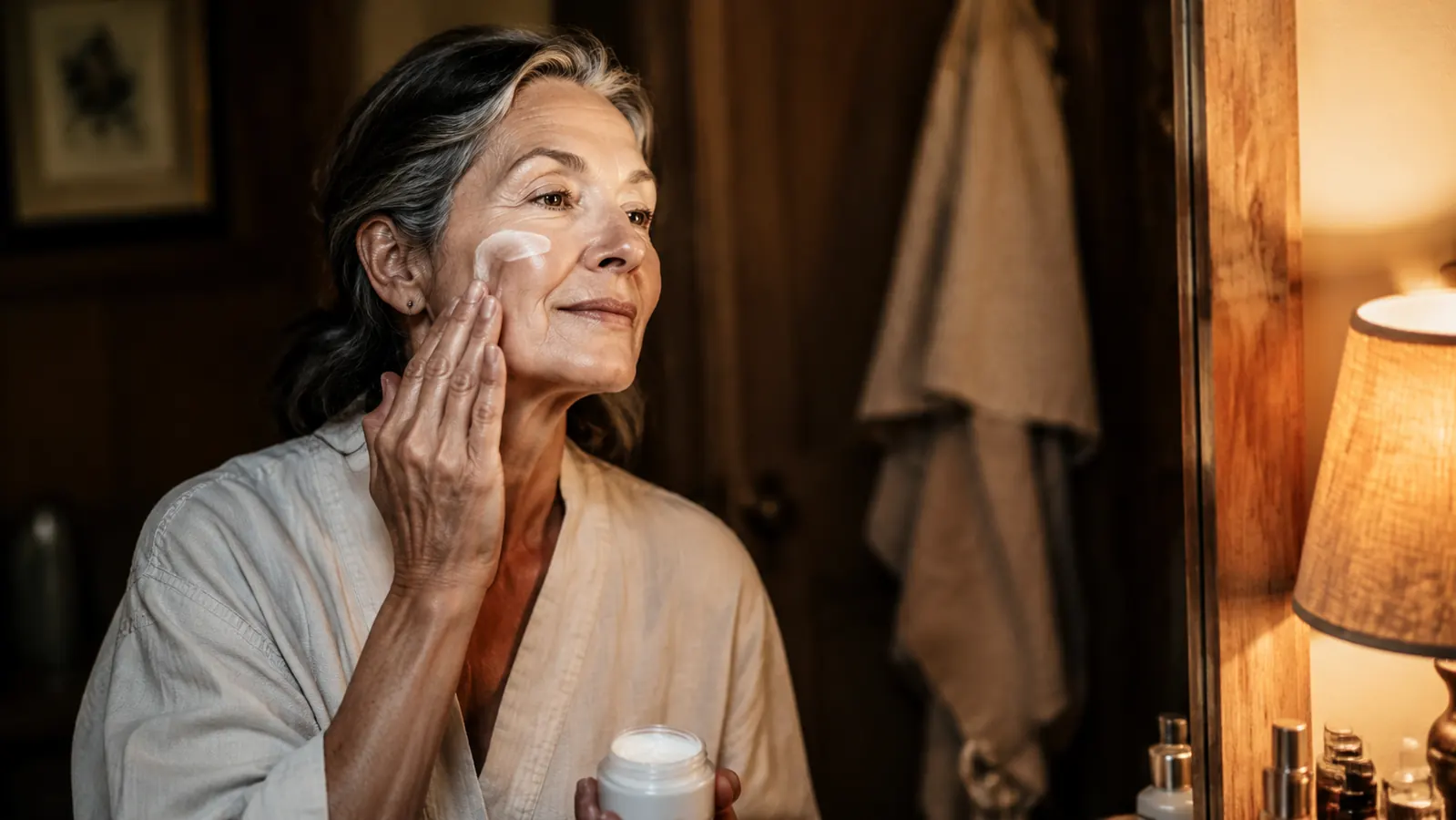
Three months ago, I opened a jar of Olay Retinol 24 Night Cream and told myself I would use it every single night until the jar was gone and then write down exactly what happened. I am 62. My skin is dry, a little sensitive around the nose, and I have forehead lines that have been setting in since my early fifties. I have spent a long time writing about skincare and a longer time being quietly frustrated that most reviews are written after two weeks, which tells you almost nothing about how retinol actually behaves on mature skin. So I waited the full cycle. What follows is what I honestly found.
The short answer is that the Olay Retinol Night Cream earned a permanent spot in my routine, but not for all the reasons the box claims. Firmness improved. Fine lines around my mouth softened. My skin looked more even in the mornings after about six weeks. But the deep forehead lines I wanted most to address barely budged, and I had two weeks of flaking in month one that nobody warned me about. I will walk through all of it.
The Quick Verdict
A well-formulated, fragrance-free retinol night cream that genuinely improves skin texture and tone over 90 days, though it works better on fine lines and dullness than on deep wrinkles.
Amazon Check Today's Price →Your skin repairs itself at night. Give it the right ingredients to work with.
Olay's Retinol Night Cream pairs retinol with niacinamide, peptides, and a triple collagen complex. It has over 15,000 reviews on Amazon and a 4.6-star rating. See today's price below.
Amazon Check Today's Price on Amazon →How I Used It for 90 Days
I applied the Olay Retinol Night Cream every evening after washing my face and using a simple hyaluronic acid serum. I let the serum sink in for about 60 seconds, then used roughly a dime-sized amount of the night cream, patting it across my forehead, cheeks, and chin. I avoided my eye area entirely for the first four weeks, then started carefully patting a small amount onto my outer crow's feet after I confirmed my skin was not reacting. My routine otherwise stayed exactly the same: the same gentle cleanser I have used for years, the same SPF 50 every morning. I did not add any other actives during the test period so that I could isolate what the Olay cream was doing.
I weighed 143 pounds throughout, drank about 64 ounces of water most days, and took no new supplements. I note all of that because I am a little obsessive about controlling variables. I took photos in the same bathroom under the same lamp every four weeks, which is a habit I picked up during years of writing about this stuff. I also kept a short nightly log of any sensations: tingling, dryness, redness, or nothing notable. That log is what most of the detail in this review comes from.
What Is Actually in This Cream
The Olay Retinol Night Cream markets itself on three things: retinol, a triple collagen complex, and niacinamide. The retinol is the primary active here. Olay does not disclose the exact percentage, which is common in drugstore formulas, but based on the adjustment period I experienced, it reads as a moderate concentration, somewhere in the range that delivers results without being as aggressive as prescription-strength. That is appropriate for daily use on mature skin.
Niacinamide is a genuinely useful supporting ingredient. It helps with uneven tone, minimizes the look of pores, and has a calming effect that can take some of the edge off retinol irritation. The peptides and the so-called triple collagen complex are less straightforward. Collagen molecules in a topical cream are too large to penetrate the dermis, so what they are really doing is providing surface hydration and a smooth feel. That is still valuable on dry, mature skin, but I do not want to oversell what those ingredients are doing at a structural level. The formula is fragrance-free and non-greasy, both of which matter a great deal to me.
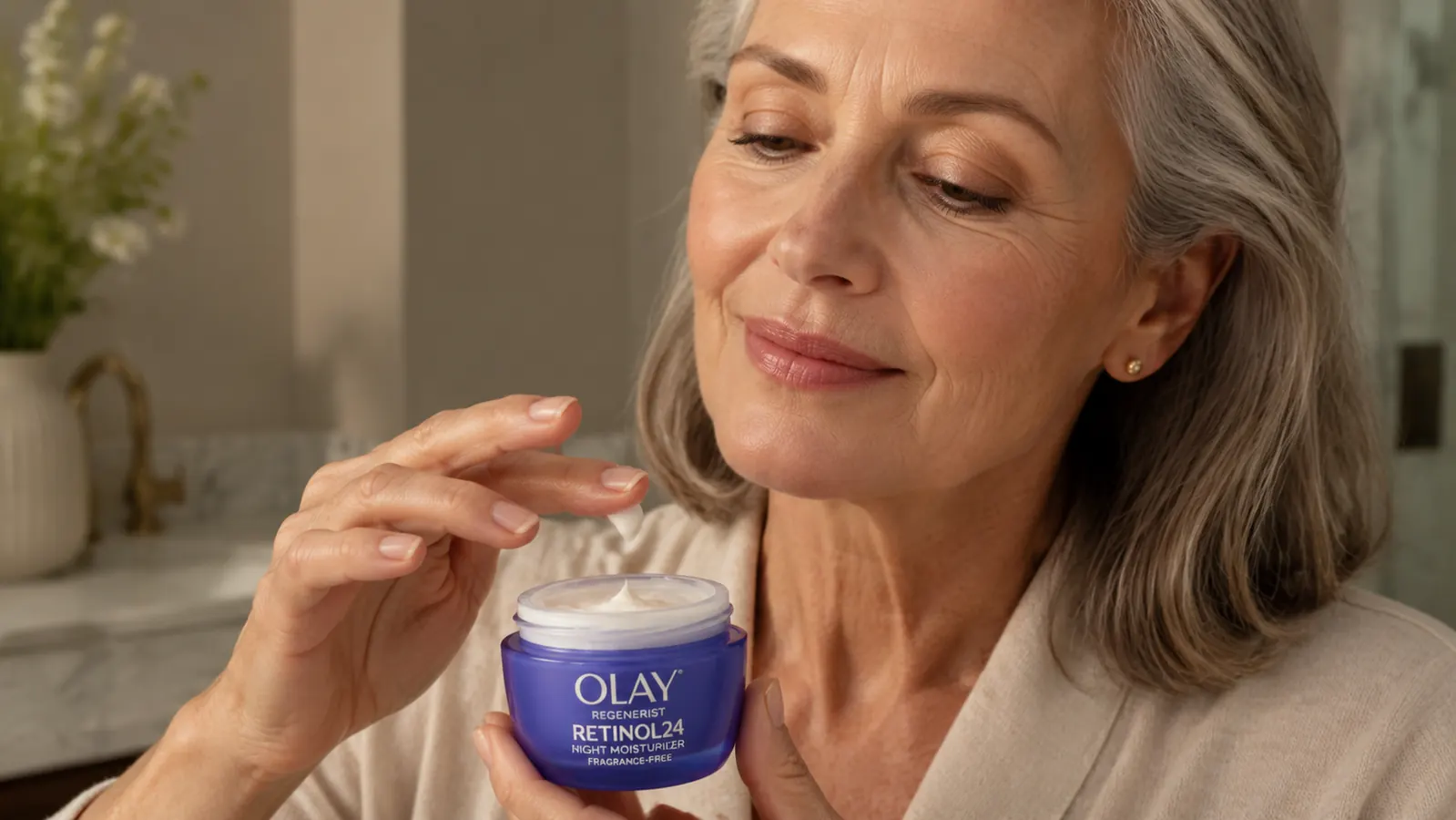
The First Month: Adjustment and Patience
Weeks one and two were unremarkable in the best possible way. My skin did not react dramatically. No burning, no severe redness. What I did notice starting around day 10 was mild flaking on my chin and along the edges of my forehead near my hairline. This is completely normal with retinol. The ingredient speeds up cell turnover, and the older dead cells shed faster than your skin is used to. On my younger skin years ago this would have been no big deal. On my current skin, which is drier and thinner, the flaking was noticeable enough that I had to use a very gentle touch when cleansing and add a slightly thicker layer of cream to those areas. I also started applying on alternate nights for about ten days until my skin caught up.
By week four, the flaking had settled. My skin was not dramatically different yet, but it felt smoother to the touch in the mornings, the way good skin feels when you run a finger across your cheekbone. In my notes I wrote: 'Not wow, but not nothing.' That is about right for week four.
Months Two and Three: Where It Got Interesting
Around the six-week mark, something shifted. My skin tone started looking more even. I have some discoloration from old sun damage on my left cheekbone, a patch that has been there for years. It did not disappear, but it faded noticeably, enough that I stopped reaching for heavier coverage on that side. That is the niacinamide working alongside the retinol, and it is one of the combinations I find genuinely useful on skin over 50.
The fine lines around my mouth softened. The lines along the corners of my mouth, not the deep nasolabial folds but the smaller, radiating ones, became less prominent. In my four-week photo comparison at the eight-week mark, the difference was visible to me even without squinting. My daughter, who is 34 and skeptical of everything, looked at the two photos and said something changed around my mouth. She could not say what. That counts.
Firmness is harder to photograph but real. My cheeks felt less loose in the mornings, and I started noticing that my face held its shape a little longer into the afternoon on days when I was on my feet a lot. I hesitate to attribute all of that to one product, but I was not using anything else new.
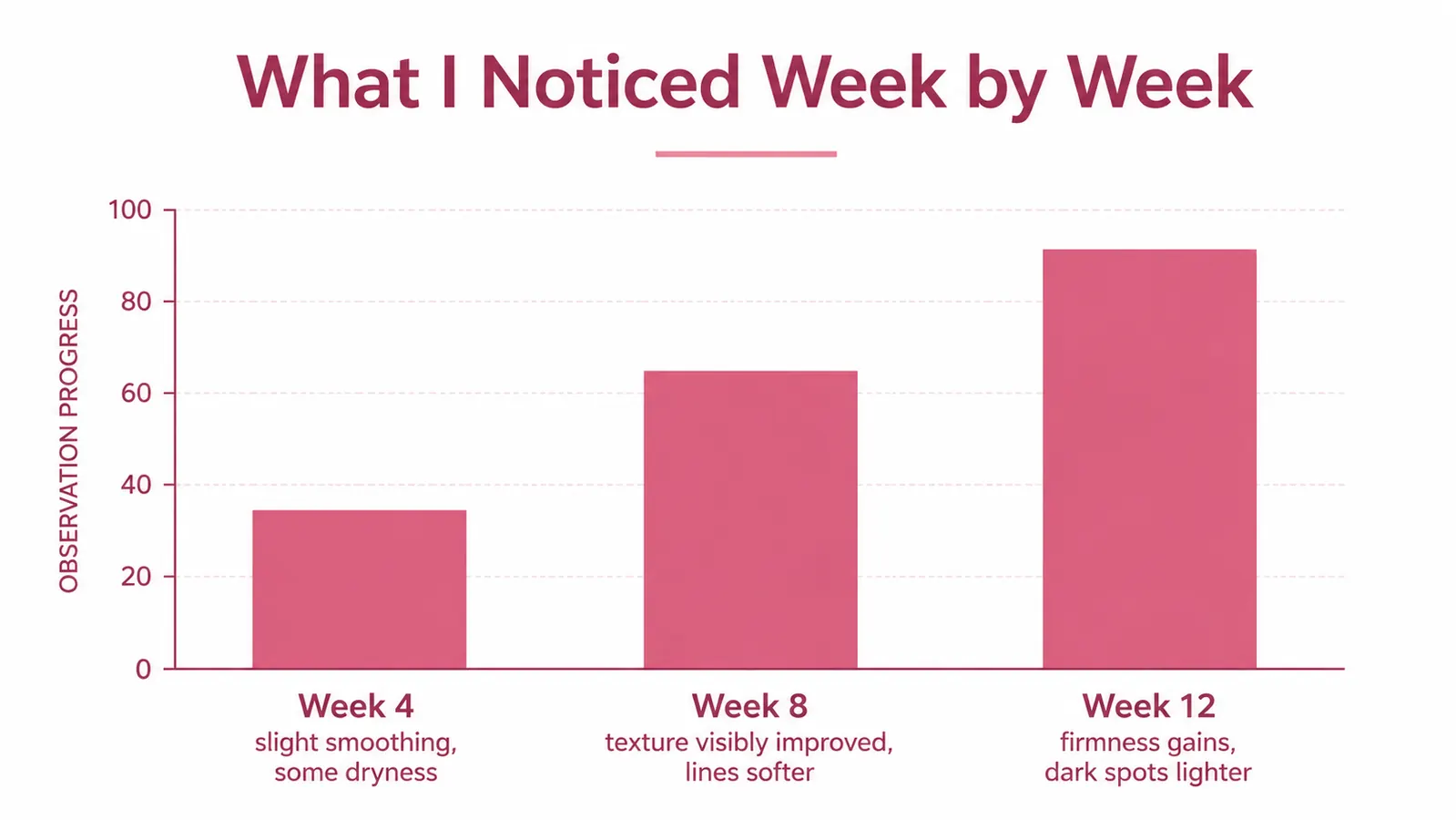
By week eight, my daughter looked at my before photo and said something changed around my mouth but she could not say what. On a 90-day retinol test, that is about the most honest endorsement you can get.
What Did Not Improve
I want to be direct about the forehead lines because they are the reason most women in their sixties reach for a retinol cream in the first place. My forehead lines are deep and have been there for over a decade. Over 90 days, they did not meaningfully improve. They may be slightly softer when my face is fully relaxed, but in any photograph or in any regular mirror I cannot see a difference. Retinol at drugstore concentrations is not going to erase lines that are structurally set. That requires either higher-concentration formulas (prescription tretinoin or professional-grade retinol), injectables, or both. I knew this going in, but I want to say it plainly because the marketing on the jar does not.
I also had two nights in month two where I used the cream on top of a slightly damp face and woke up with noticeable redness by my nose and around my jaw. That was user error on my part, but it is a good reminder that retinol in a thicker cream base can push more active into the skin if the skin is wet. Always apply to completely dry skin.
Texture, Feel, and Daily Use
The cream itself is pleasant to use. It applies smoothly, sinks in within about two minutes, and does not leave my pillow with a greasy residue, which is more than I can say for some of the heavier night creams I have tried. The jar packaging is the one thing that gives me pause. Retinol degrades with light and air exposure, and a wide-mouth jar means you are opening and exposing the entire product to the elements every night. A pump or tube would preserve the retinol better over a 90-day period. It is a minor complaint, but it is real.
The fragrance-free formula is something I appreciate sincerely. Added fragrance in a retinol product is a combination that frequently causes sensitivity on mature skin. Olay got that right. The 1.7-ounce jar lasted me comfortably through the 90-day test with some left over, using a dime-sized amount each night.
What I Liked
- Fragrance-free formula is a genuine asset on sensitive mature skin
- Noticeable improvement in skin tone and fine-line softening by week six to eight
- The niacinamide and retinol combination is a well-supported pairing for pigmentation
- Lightweight feel, no greasy residue on pillowcase
- Over 15,000 Amazon reviews at 4.6 stars, consistent with what I experienced
- Lasts a full 90-day cycle on one jar at a dime-sized nightly dose
Where It Falls Short
- Jar packaging exposes retinol to air and light every night, reducing shelf stability
- Deep, structural wrinkles (forehead lines, nasolabial folds) showed little improvement
- Adjustment period of mild flaking in weeks two through four may catch some users off guard
- Retinol concentration is not disclosed, making it hard to compare against other formulas
- Applying to slightly damp skin caused redness on two occasions
How It Compares to What I Used Before
Before this 90-day test, I had been using the RoC Retinol Correxion serum for the previous four months. The serum is a different delivery format, thinner and more concentrated, applied before moisturizer rather than as the final step. The RoC serum produced faster early results on texture in my experience, but it was also more likely to cause sensitivity. The Olay cream is gentler and more moisturizing, which makes it a better fit for very dry or sensitive mature skin. If you are already using a retinol serum and love it, the Olay cream is not a straight upgrade. If you have been avoiding retinol because serums felt too harsh, the cream format is a genuinely softer entry point.
For a more direct comparison of the two products, I have a full breakdown in my Olay Retinol Night Cream vs RoC Night Cream article. And if you are weighing whether a retinol night cream is worth adding to your routine at all, my piece on 10 reasons a retinol night cream outperforms a plain moisturizer for mature skin walks through the science.

Who This Is For
The Olay Retinol Night Cream is a strong choice if you are in your fifties or sixties, have dry or combination skin, and want to start or continue a retinol routine without the sensitivity risk of a serum. It is especially well suited for women dealing with uneven skin tone, mild discoloration from sun damage, and fine lines that are not yet deeply set. If you have never used retinol before, the cream format and the moderate concentration make this one of the least intimidating places to start. You will need to be patient. Nothing happens in the first two weeks, and the real payoff does not arrive until around week six. But if you stay consistent, the results are real.
Who Should Skip It
If your primary concern is deep, established wrinkles, especially forehead lines or nasolabial folds that have been present for more than a decade, this cream is unlikely to satisfy you at the drugstore concentration. You would get better results from a dermatologist-prescribed tretinoin or a professional retinol at 0.5 percent or higher. Similarly, if you have very reactive skin, rosacea, or are prone to barrier disruption, I would start with an even lower-potency retinol every third night before committing to nightly use. And if you prefer a pump or tube for hygiene and product stability, the jar format here is worth noting before you buy.
If you are ready to give retinol a fair, 90-night chance, this is a solid formula to start with.
The Olay Retinol Night Cream is fragrance-free, has a gentle cream texture that suits dry mature skin, and has over 15,000 verified buyer reviews on Amazon. Check today's price and see if it is in stock.
Amazon Check Today's Price on Amazon →