

My rule for any bestselling skincare product is simple: the bigger the review count, the deeper I dig. When something has 33,000 reviews on Amazon, that crowd can drown out the 20 percent of buyers who had a different experience, and those are usually the people telling you the most useful things. I am Diane Holloway, and I spent 30 years writing about skincare before I retired. I still test products the same way I always did, on my own 62-year-old face, with no brand relationship, no gifted product, and no reason to soften the truth. The RoC Retinol Correxion Under Eye Cream is one I had been circling for a long time. It is everywhere, it shows up in dermatologist roundups, and the Amazon review count is genuinely extraordinary for a drugstore product. So I bought two tubes with my own money and used it twice a day for 90 days. Here is what I found, including what the brand's marketing leaves out.
Before I get into results, I want to be honest about my baseline. I have noticeable crow's feet that run about a centimeter from the outer corner of each eye when my face is relaxed. I have moderate under-eye darkness, the kind that is a mix of pigment and blood vessel show-through rather than pure shadow, and mild puffiness in the morning that settles by mid-morning. I have tested roughly 14 retinol eye creams over the past six years. I know what retinol can realistically do around the eye area, which is why I can tell you clearly where this one lives up to expectations and where it falls short of what the bottle implies.
The Quick Verdict
A solid, clinically supported retinol eye cream that genuinely reduces fine lines over time. Worth buying if you go in with patient, realistic expectations. Not worth it if you are hoping for dark circle correction or fast results.
Amazon Check Today's Price →Your crow's feet did not appear overnight, and the right eye cream will not erase them overnight either. This one delivers if you give it time.
The RoC Retinol Correxion Under Eye Cream is currently available on Amazon. Check the current price before you buy, because it fluctuates and you can often find it cheaper than the suggested retail.
Amazon Check Today's Price on Amazon →What the Label Says Versus What the Ingredients Actually Are
RoC markets this cream around two things: retinol and a mineral complex it calls Hexyl-R Complex. The retinol claim is legitimate. Retinol is listed in the active or near-active position on the ingredient deck, and the percentage, while not disclosed (brands rarely disclose eye cream retinol percentages), is consistent with the mild irritation profile most users report. For the eye area, where skin is four times thinner than the rest of the face, you actually do not want the stronger concentrations used in body or face serums. The formulation approach here is appropriate for where it is being applied.
The mineral complex is less straightforward. RoC does not publish the composition of Hexyl-R Complex in detail. The supporting ingredients include copper, zinc, and manganese, which are antioxidant cofactors. They are not useless, but they are also not the headline ingredient the marketing makes them sound like. The moisturizing base uses glycerin, petrolatum, and dimethicone, which are effective occlusives and humectants. The formula is fragrance-free, which matters around the eye area where fragranced products are a common irritation trigger. Mineral oil is present, which some users object to on principle, though the evidence that it causes problems in well-formulated creams is thin. Overall the ingredient list is competent and not padded with filler claims. That is more than I can say for some products three times the price.
What Nobody in Those 33,000 Reviews Explains Clearly
I read approximately 200 reviews in detail before I started my own test. The positive reviews cluster around three outcomes: softer fine lines, improved skin texture, and eyes that look more awake. That last phrase is where it gets slippery. Eyes that look more awake can be the result of reduced crow's feet texture, or it can simply be the moisturizing effect making the skin look plumper for a few hours. A good occlusive moisturizer will do that. Retinol's cell-turnover benefit takes six to twelve weeks to produce structural change. Most short-term positive reviews are responding to hydration, not retinol action. That is not a criticism of the product. It is a distinction the brand should make more clearly, and almost never does.
The negative reviews, which run at about 13 percent of the total, concentrate on three things: irritation and stinging on application, no visible change after two to three months, and the small tube size relative to price. The irritation complaints are worth taking seriously. The eye area is reactive, and even a well-calibrated retinol percentage can cause stinging in people with sensitized or very dry skin. If you have rosacea around the eye contour or a history of reacting to retinol on your face, approach this one slowly. Use it every other night for the first three weeks, then move to nightly once your skin adjusts.
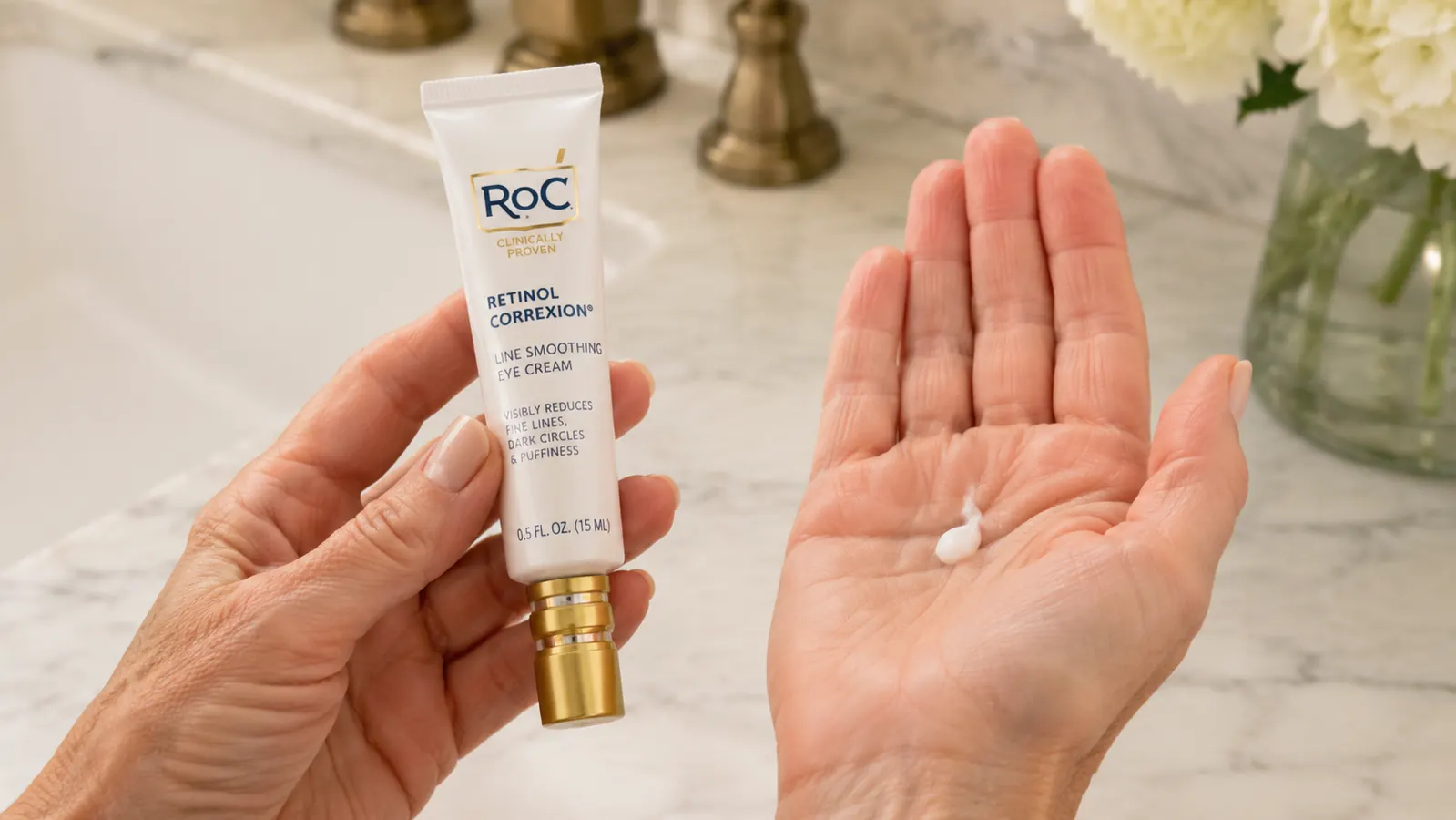
My 90-Day Testing Notes, Week by Week
Weeks one through three, I applied a rice-grain amount to each eye area at night only, tapping it in from the outer orbital bone inward. No stinging on my skin, but I have been using retinol for four years on my face and my tolerance is established. Light flaking appeared around day nine on the outer corner of my left eye, which is typical retinol cell turnover. I moisturized over it in the morning and it resolved by week four. No irritation otherwise.
Weeks four through six, I added a morning application as the instructions suggest. The morning application went under sunscreen without pilling, which is a practical detail that matters more than people give it credit for. By week six I noticed my crow's feet were catching less light in photographs, which is the earliest reliable sign that texture is changing rather than just hydration fluctuating. Under-eye darkness, though, was essentially unchanged.
Weeks seven through twelve brought the more meaningful changes. The fine lines radiating from the outer corner of each eye were visibly softer when I examined my face in natural light, not magnified bathroom light where everything looks worse. The under-eye skin felt firmer to the touch. Morning puffiness seemed to subside slightly faster, though I cannot attribute that confidently to retinol versus the simple massage action of applying a cream twice daily. Dark circles did not change in any meaningful way, which I fully expected. Dark circles driven by vascularity and pigment require vitamin C or caffeine actives, not retinol. If dark circles are your primary concern, this is not the product that will address it.
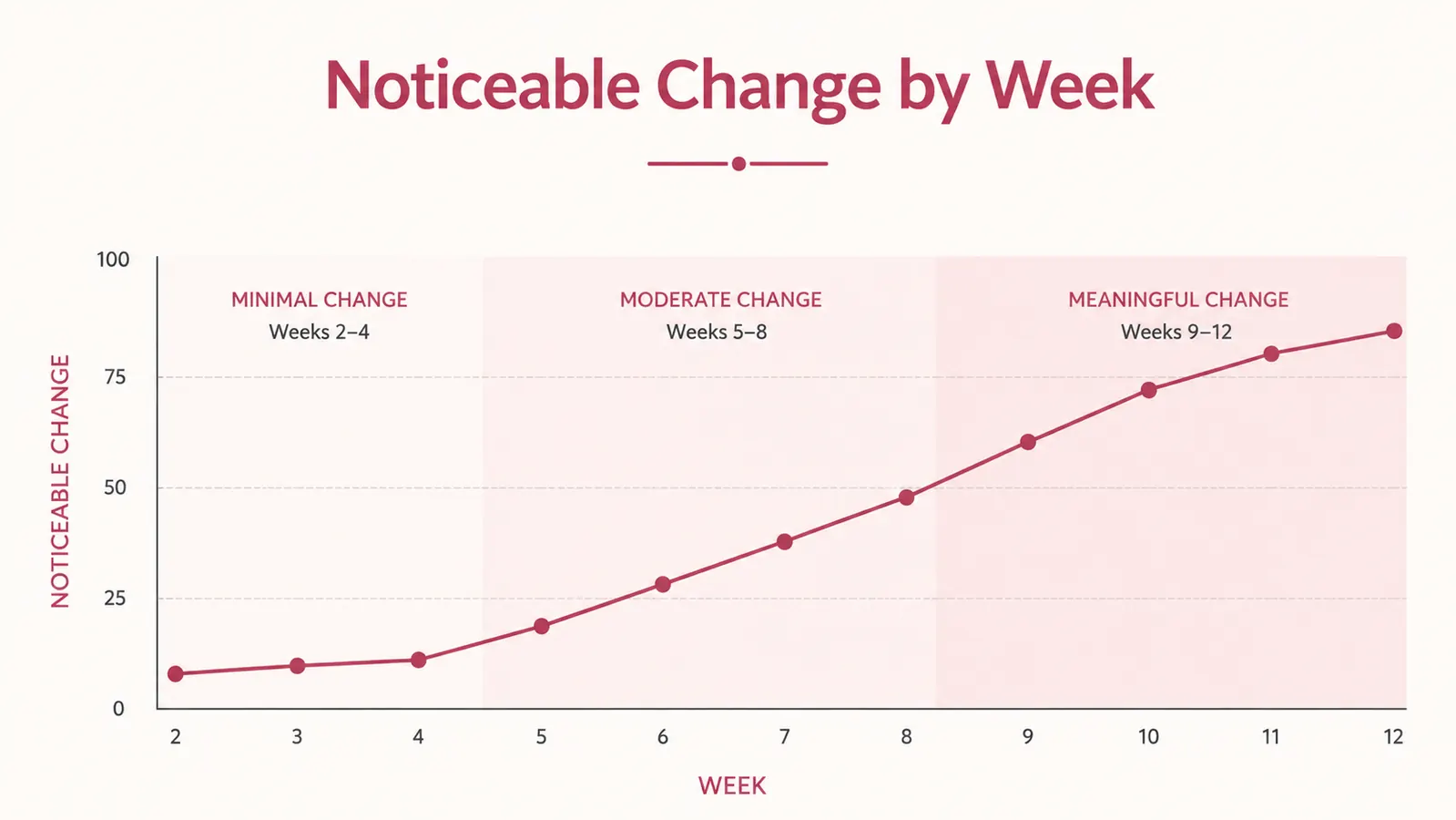
By week six my crow's feet were catching less light in photographs. That is the earliest reliable sign that texture is changing, not just hydration bouncing around.
The Packaging Problem Nobody Talks About
The tube is 0.5 ounces. That sounds small because it is small. RoC positions this as a feature in a sense, suggesting the airless tube protects retinol from oxidation, which is true. Retinol degrades in air and light exposure, and a tube dispenses product without introducing air the way an open jar does. That part I have no argument with. But a 0.5-ounce tube at twice-daily use for two eyes will last approximately 60 days if you are using the recommended amount. A proper 90-day retinol trial requires at least two tubes, often two and a half. The per-ounce cost comes out higher than the sticker price suggests, and new buyers who do not do that math often conclude the product stopped working when they actually just ran out before the retinol had time to produce structural change. This is not a small point. It is a setup for disappointment that the brand packaging does nothing to prevent.
My suggestion: buy two tubes when you start. Commit to a full 12-week cycle before you evaluate. If the price of two tubes feels like a lot for a product you have not tested, that is a fair hesitation. The honest answer is that retinol products at any price point require that kind of commitment, and the ones that claim faster results are usually just delivering aggressive moisturization rather than actual retinol action.
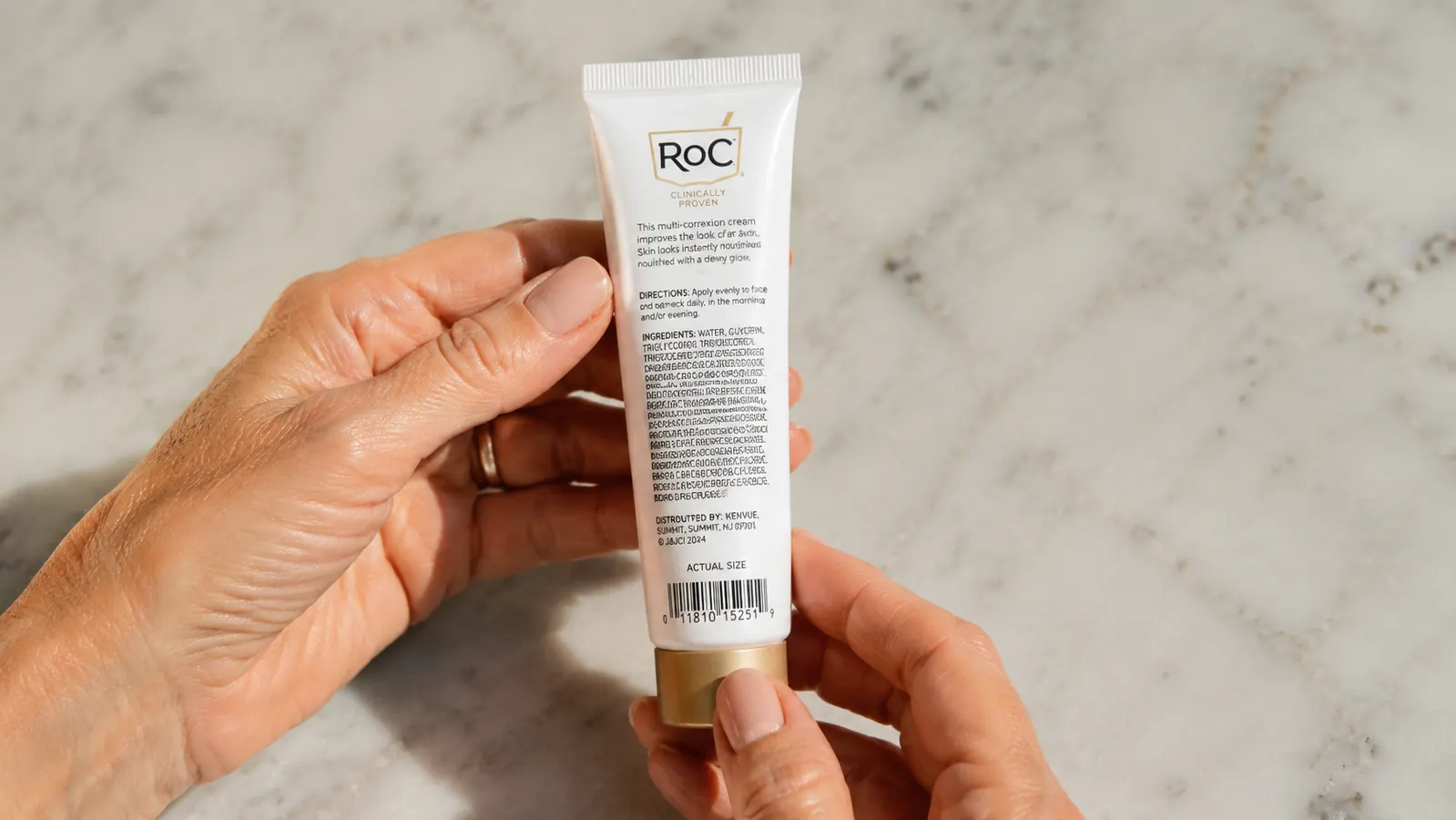
The Application Detail That Most People Get Wrong
The instructions on the box say to apply to the orbital bone area, and most people read that and dab the cream directly onto the under-eye hollow. That is too close. The orbital bone is the ridge of bone that surrounds your eye socket, and you should be applying the cream at or just inside that ridge, not on the soft tissue directly beneath the lash line. Applying too close to the eye itself increases the chance of product migrating onto the ocular surface, which causes the stinging complaints you see in those one-star reviews. I tap in a very thin layer with my ring finger, starting at the outer corner and working toward the inner corner, never pulling or dragging. Pulling the skin around the eye, even gently, over 90 days adds up.
The other mistake is using too much. A rice grain for both eyes combined is genuinely all you need. The skin around the eye cannot absorb more than a thin layer, and excess product either migrates or sits on top and causes milia (those small white bumps some women notice after starting an eye cream). If you have been getting milia, using less product is the fix, not switching brands.
How It Compares to What Else Is Out There
I have used Neutrogena Rapid Wrinkle Repair Eye Cream in the same testing rotation. At a similar price point it uses retinol alongside hyaluronic acid and is a heavier, more emollient formula. The Neutrogena felt more immediately moisturizing, which made it feel like it was working faster. But by week 10 the fine-line improvement I measured on the RoC side was comparable, possibly slightly better. Neutrogena's formula pilled slightly under my morning sunscreen, which the RoC did not. If layering under SPF is part of your morning routine, that is a practical advantage for the RoC. If you have very dry under-eye skin that needs the richer texture, Neutrogena might feel more comfortable in the first few weeks.
Prescription retinoids outperform both at the active ingredient level, but they require a dermatologist visit, come with higher irritation risk around the eye contour, and are rarely formulated specifically for under-eye use. For an over-the-counter option at a drugstore price, the RoC formula is in the upper tier of what the category actually delivers. You are not paying for filler claims or luxury packaging. The formula earns its reputation, with the caveats I have described. You can read a full head-to-head comparison in my piece on RoC versus Neutrogena for under-eye care if you want more detail on that specific matchup.
What I Liked
- Retinol is genuinely present and active, not just a label claim
- Fragrance-free formula is appropriate for sensitive eye-area skin
- Airless tube protects retinol from oxidation over time
- Does not pill under sunscreen, practical for morning use
- Measurable fine-line and crow's feet improvement at the 10-12 week mark
- 4.3 stars across 33,000 or more reviews reflects broadly consistent real-world performance
Where It Falls Short
- 0.5-ounce tube runs out before a full 90-day trial if you use the right amount twice daily
- Zero impact on vascular or pigment-driven dark circles
- Results require 8 to 12 weeks of patient, consistent use
- Mineral complex marketing is vague and the ingredient evidence is modest
- Can cause stinging in very sensitive or rosacea-prone skin around the eyes
- Morning puffiness improvement is minimal and hard to distinguish from massage effect alone
Who This Is For
This cream is a good fit if fine lines and crow's feet are your primary under-eye concern and you are willing to use a product consistently for at least three months before expecting visible change. It suits women who already have some tolerance to retinol from using it elsewhere on the face, and who layer products in the morning and need something that does not pill under SPF. It is also a solid starting retinol eye cream for someone who has never used one, because the concentration is calibrated conservatively for the thin skin around the eyes. If you have dry under-eye skin, apply a plain eye moisturizer on top in the morning to seal in the treatment and prevent that tight-feeling dryness some women notice in the first few weeks. The long-term results I saw after my full testing cycle are covered in more depth in my piece on three months of daily use, which looks at the before and after from a different angle.
Who Should Skip It
If dark circles are your main complaint, save your money and look for an eye cream with vitamin C, niacinamide, or caffeine as the primary actives. Retinol does not address vascular darkness or melanin pigmentation in a meaningful way, and no amount of patience will change that. Also skip this if you have a history of rosacea or eczema around the eye contour. The retinol percentage is conservative but the eye area is reactive, and even mild concentrations can trigger flares in sensitized skin. Finally, if you want results in four weeks, this will disappoint you. Retinol biology does not accelerate to meet impatient expectations, and no honest reviewer should tell you otherwise.

If fine lines and crow's feet are your target, this is one of the few drugstore eye creams where the retinol is doing real work.
90 days, two tubes, consistent use. That is the honest commitment this product requires. Check today's price on Amazon and decide whether it makes sense for your routine.
Amazon Check Today's Price on Amazon →